Schools and daycare · Lakeville, MN

School and Daycare Cleaning in Lakeville

Cleaning for classrooms, childcare centers and in-home programs, where the surfaces that matter sit at knee height, cafeterias turn over in minutes, and one illness moves through a room quickly.

✓Touch points at child height ✓Classrooms and cafeterias ✓Programs of any size
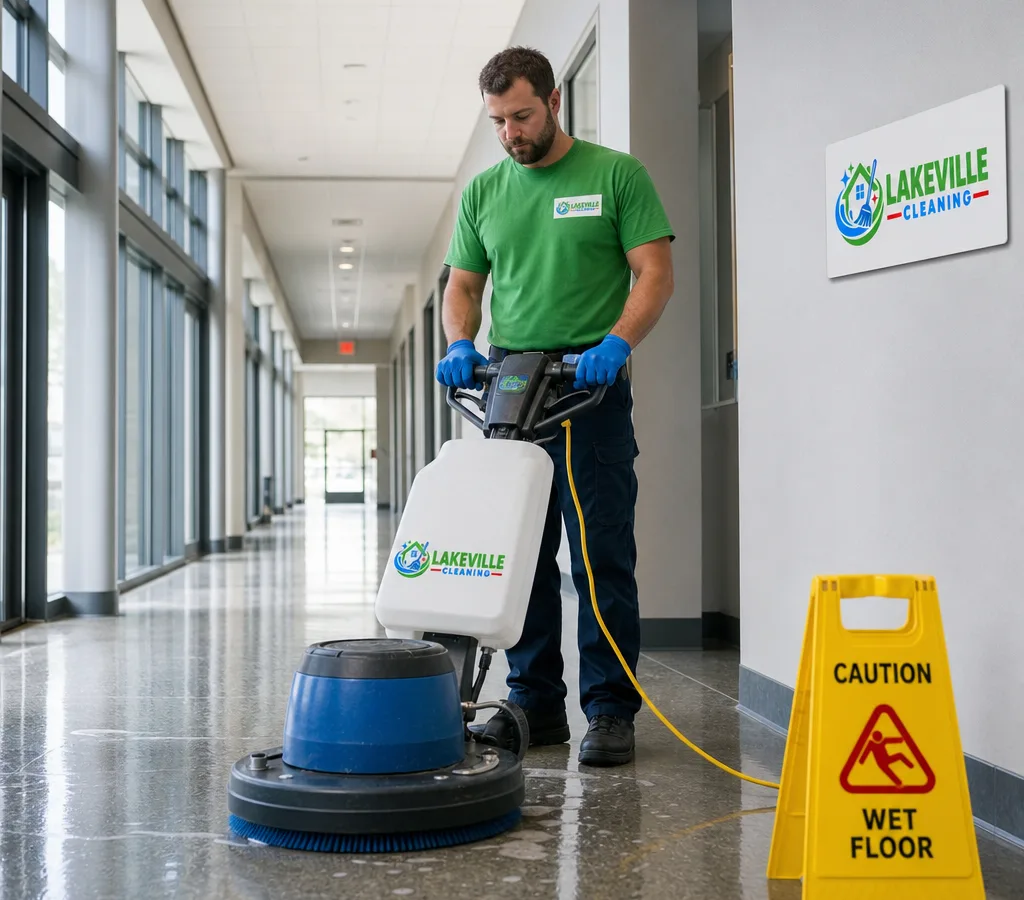
Cleaning technician maintaining commercial hard floors in a Lakeville facility hallway with a floor machine and wet-floor safety signage

Children touch different surfaces than adults do

Adults touch door handles. Children touch door frames, chair backs, table undersides, cubby edges, window ledges, the floor and each other, which puts the real work between the floor and about three feet up, exactly where an adult eye skips over it.

Illness season concentrates all of that. From late fall into early spring a single room can pass something around within a week, and the answer is frequency and method on shared surfaces rather than a stronger product used once. Snow gear adds a wet, muddy corner at every entry.

Crews leave from 20855 Kensington Blvd, Suite 4 in Lakeville each afternoon, which puts schools, centers and in-home child care programs around town inside a short run, and makes an evening start realistic once the last pickup of the day has finished.

Request a Callback
Classroom to cafeteria

What cleaning a learning space involves

Rooms used by children fail in their own places. Below are the areas needing the most attention, and the ones a state visit tends to look at closely.

Touch points at the right height

Chair backs, table undersides, cubby edges, door frames, light switches and handrails get disinfected on a set rotation. Working at child height is the single biggest difference between cleaning a classroom and cleaning an office.

Cafeterias between sittings

Tables, bench undersides, serving-line surfaces and the floor after a lunch period need speed and a method that holds up. Food residue and spilled milk left in a seam is where a cafeteria smell begins within a day.

Restrooms sized for children

Low fixtures, short partitions and small sinks mean splash lands differently and dries where nobody looks. Floors get attention around and behind fixtures, and supplies are checked often, since children do not report an empty dispenser.

Toys, cots and soft surfaces

Hard toys, cots, mats and shared play equipment follow your center's own washing and sanitizing procedure. Crews handle what your staff asks them to and leave anything on your documented list with your own team, by design.

Entries through a Minnesota winter

Boots, snow pants and wet mittens turn coat areas and vestibules into standing moisture for months. Those spots get frequency and drying attention, because a wet floor in a corridor full of running children is a safety matter first.

Calendar and coverage

Schedules that follow a school or center calendar

Learning spaces run on a calendar nobody else uses: a term that empties the building, conference evenings, a daycare open from dawn until dinner, and a summer when the whole place can finally be reset. A workable plan carries all of that, which usually means a steady weekly rhythm plus a small number of scheduled heavy weeks.

What a school or center plan includes:

  • ✓Daily evening service. Classrooms, restrooms, cafeteria and corridors cleaned after pickup or after the last activity, keeping shared surfaces current and the building ready for an early start the next morning.
  • ✓Increased rotation in illness season. Touch points, restrooms and cafeteria surfaces move to a heavier cycle from late fall into spring, then step back down, so the extra effort lands in the months that actually need it.
  • ✓Break and summer resets. Closures are when floors, upholstery, high dusting, vents and storage can be done properly with rooms empty, and when work that would never fit into an evening visit finally gets its date.

An in-home child care program is a house before it is a classroom, and it needs a household-level clean alongside the center-level discipline. Our residential cleaning service covers the first part, which is why in-home providers usually want both on one schedule.

Request a Callback
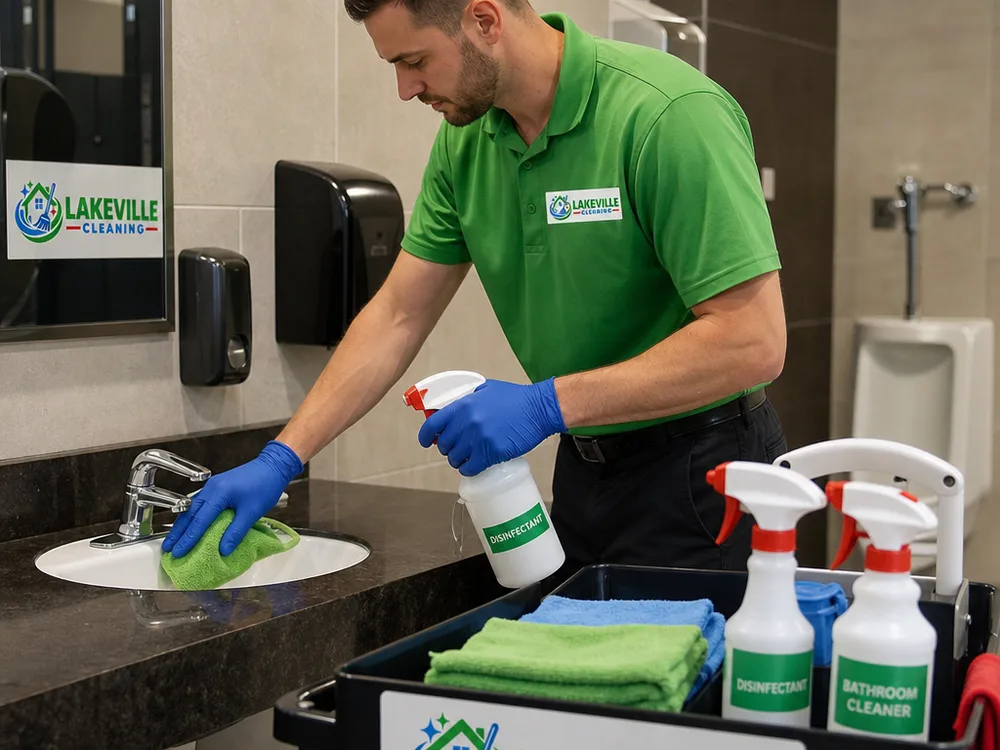
Cleaner disinfecting commercial restroom fixtures with organized supplies and microfiber cloths
Getting approved

Working inside a school or center's own rules

Access takes the longest here, for good reason, and everything after it follows procedures your program already has written down somewhere.

01

Clear access and vendor rules

Your director explains the sign-in process, who may be in the building and when, and what licensing or a district requires of outside vendors. Cleaning scheduled after hours keeps this straightforward for everyone involved.

02

Separate your tasks from ours

Centers have staff procedures for toys, cots, bedding and anything that reaches a child's mouth. Those stay with your team. The written scope lists what crews do, so no task is assumed covered twice or missed by both sides.

03

Set the seasonal step-up

Illness-season frequencies and break-week projects get agreed with dates attached, rather than being requested in the week a classroom has already had three children out sick and a worried parent asking questions.

04

Review the building with your director

After the first weeks we go through the building with whoever signs off, and adjust. Classrooms differ by age group, and a toddler room needs a different list from a fifth-grade classroom with the same floor area.

Request a Callback
What sets the price

How Much Does School and Daycare Cleaning Cost in Lakeville?

Classroom and cafeteria work is quoted on the usual commercial per-square-foot basis, about $0.10 to $0.25, with smaller centers often in the $300 to $900 per month range and larger buildings with daily service reaching $1,200 to $6,000+ per month.

Room count, restroom fixtures, and cafeteria turnover set the baseline. A planned step-up in touch point frequency through illness season is quoted as part of the agreement rather than billed as a surprise. Access windows around the school day shape the schedule and the figure alike.

Request a Callback
Director questions

What a principal or center director asks at the first meeting

Are the products you use appropriate around children?

Product choice is part of the scope and gets agreed before the first visit, not decided by whoever is holding the bottle. Centers often have a required list already, and we work to it. Where we supply, the usual approach is a disinfectant your licensing accepts, used at label dilution, applied when children are not in the room.

Who cleans the toys, cots and bedding?

Your staff, in nearly every center, because licensing ties those tasks to documented procedures and trained people. Crews clean the rooms those items live in: floors, surfaces, shelving, cubbies and touch points. Where a director does want certain items added, it gets written into the scope so the documentation still matches reality.

Can frequency increase when illness goes through a room?

Planning it as a season beats treating it as an emergency. A standing step-up from late fall through spring on touch points, restrooms and cafeteria surfaces catches most of it. For an active outbreak, an added visit focused on one room's shared surfaces can be arranged, usually for the same evening if we hear early.

Do you work within our district or licensing vendor requirements?

Yes, and we expect those requirements to be specific. Sign-in, escort rules, which doors stay locked, whether crews may be present while children are in the building, and what records you need from a vendor all get settled before the first visit. After-hours scheduling removes most of the complexity by itself.

We run a small in-home daycare. Is that too small for you?

Not at all. An in-home program is a house carrying center-level traffic, which is an unusual combination: kitchen and bathrooms used like a family's, play areas used like a classroom's. Those homes usually want the household clean and the touch-point discipline together, scheduled around nap time or after the last pickup.

What should happen over summer break?

The reset that never fits during term. With rooms empty, floors can be stripped or extracted properly, high dusting and vents get reached, furniture moves so baseboards and corners are cleaned, and storage areas get emptied and wiped. Booking it early matters, because every school in the area wants the same few weeks.

Plan the school year

Cleaning built around children and a calendar

Tell us your room count, your closing time, and whether this is a school, a center or a program running out of a home. An after-hours visit covers it, with the seasonal step-up written in and your own program rules followed. Call us with those details to book a walkthrough.

Request a quote

Tell us about your space

Send the basics and we will follow up to arrange a walkthrough and put the scope in writing.