Salon and spa cleaning · Lakeville

Salon and Spa Cleaning in Lakeville

Cleaning for salons, barbershops and spas, where product residue films every surface, treatment rooms turn over all day, and clients treat the room's condition as part of what they paid for.

✓Hair and product residue ✓Treatment room turnover ✓Wet area attention
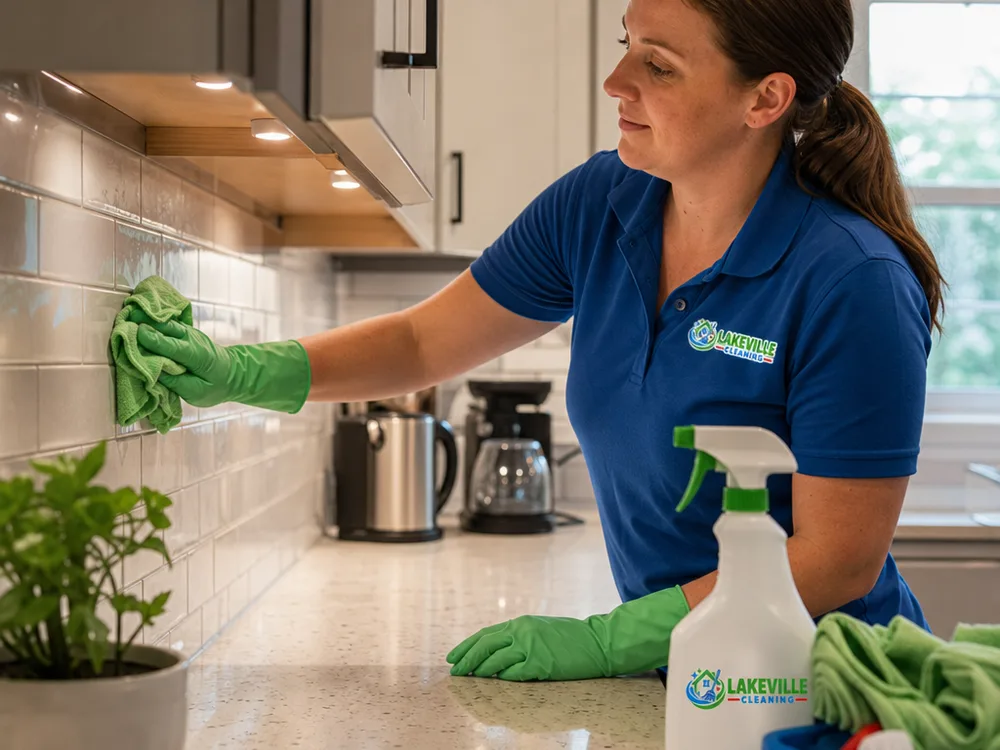
Cleaner carefully wiping kitchen countertops and backsplash with appropriate cloths and supplies

Clients read the room as part of the treatment

Somebody paying to feel looked after notices what a distracted customer never would: a smear on the mirror, hair in the corner by the chair base, a dusty baseboard beside the shampoo bowl, a treatment room that still smells of the previous appointment. The room is part of the service being sold.

Residue is the technical problem underneath that. Hairspray, powders, waxes, oils and color products settle as a film that holds dust and turns sticky, and wiping it with the wrong product smears it across a surface instead of removing it. This is why a salon can look tidy and still feel unclean.

A short run from 20855 Kensington Blvd, Suite 4 in Lakeville means an evening visit after the last client is straightforward to schedule, which suits a trade where the day ends when the chair empties rather than at a fixed hour.

Request a Callback
Salon detail

Where salon and spa cleaning actually earns its money

This sector rewards detail over coverage. The square footage is usually modest, and the difficulty sits in residue, corners and the rooms clients occupy alone.

Product film on hard surfaces

Stations, mirrors, shelving, chair bases, hood dryers and the walls behind them carry an overspray film. Removing it needs a product that cuts residue rather than redistributing it, and a surface left tacky will show dust again within a day.

Hair in the places sweeping misses

Hair migrates into chair base seams, under cabinetry, along baseboards, into floor edges and across to the retail display. Between-client sweeping handles the obvious cuttings, and the perimeter needs its own attention on a regular rotation.

Shampoo bowls and wet areas

Bowls, faucets, hose attachments, the backs of chairs and the floor underneath hold product buildup and mineral scale. Hard water makes the scale visible quickly, so descaling runs on a cycle instead of waiting until it looks obvious.

Treatment rooms between clients

Spa and treatment rooms need surfaces, trolleys, door handles and floors reset for the next appointment, plus the linen handling your own protocol specifies. Crews work to whatever boundary you set for the rooms themselves.

Reception, retail and restrooms

The front desk, card terminal, seating, retail shelving and the client restroom carry the first and last impression of a visit. Retail displays in particular collect dust that makes product look old on the shelf.

Daily and periodic

Splitting what staff do daily from what a crew does

Salons already clean continuously, because a station gets swept and wiped between clients all day long. Hiring out everything would duplicate that, so the useful split is staff holding the room through the day while a crew handles the work that cannot happen with clients in the chair: perimeters, wet areas, floors and the periodic deep detail.

A sensible division of labor looks like:

  • ✓Evening visits after the last appointment. Floors done properly edge to edge, stations and mirrors de-filmed, bowls descaled on rotation, restrooms and reception reset. The room is ready before the first client of the next day arrives.
  • ✓A lighter midday pass for busy shops. Restrooms, reception, retail shelving and visible floor work during a quieter stretch of the afternoon, which suits high-volume salons where the front of the shop drifts by lunchtime.
  • ✓Periodic deep detail. Behind and under cabinetry, vents, upholstery, baseboards, wall marks around stations and heavy scale in the wet area. Scheduled on a cycle, since this is where buildup accumulates invisibly between regular visits.

Salon floors take hair, product overspray and water near the bowls, which wears a finish in patches rather than evenly. The restorative side sits with our floor care service, where matching method to material matters, because a wrong pad on a soft finish shows immediately.

Request a Callback
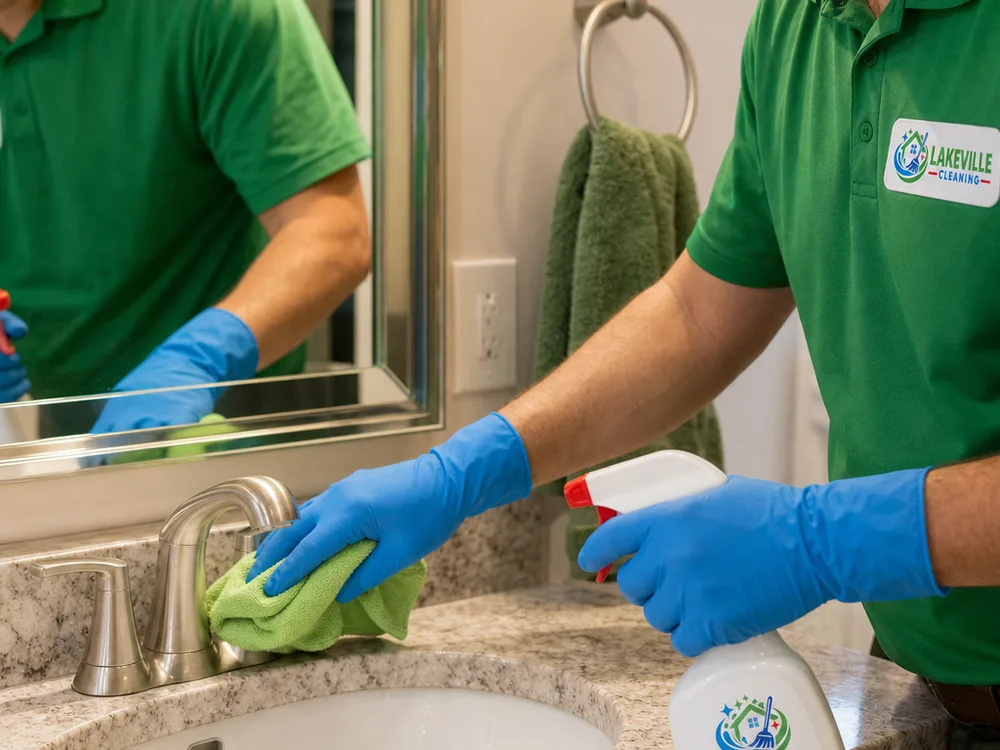
Gloved hands detail-cleaning a bathroom sink, faucet, and mirror
Fitting the trade

Working around appointments and product rules

The practical constraints in a salon are the appointment book and the products. Both get settled before a schedule is written, since neither bends easily.

01

Learn the rhythm of the week

Saturdays, late evenings and a quiet Monday change what is possible. We ask when the last client typically leaves, which days run longest, and whether the shop would rather be cleaned at night or early before opening.

02

Divide crew tasks from staff tasks

Stations, tools, product shelves and linen usually stay with your team for good reasons. Writing that line down avoids both duplicated effort and the gap where each side assumed the other was taking care of something.

03

Match products to finishes and clients

Salon surfaces include mirrors, painted cabinetry, stone, vinyl and chrome, and fragrance matters in a room where clients are relaxing. Product choices account for both, and anything you prefer we avoid is noted up front.

04

Set the deep detail cycle early

Perimeter buildup, scale and wall marks behind stations are easier to keep on a dated cycle than to notice in time. Those visits go on the calendar at setup rather than being arranged once the shop already looks tired.

Request a Callback
Salon pricing basis

How Much Does Salon Cleaning Cost in Lakeville?

Salon and spa service is priced on the standard commercial basis, roughly $0.10 to $0.25 per square foot, with most independent shops landing in the $300 to $900 per month range. Larger spas with multiple treatment rooms and wet areas can run higher, into the $1,200 to $6,000+ per month band at daily frequency.

Chair and treatment room count matter more than floor area, and product residue is what makes the difference between a tidy shop and a clean one. Wet area ventilation, floor type, and how often you want the back bar reset all feed into the quote.

Request a Callback
Salon owners ask

What salon owners usually want to know first

We sweep all day already. What does a cleaning crew add?

The work your team cannot reach with clients in the chair. Between-appointment sweeping keeps the floor presentable, and hair still migrates into base seams and baseboards, product film still builds on mirrors and shelving, and bowls still scale. A crew handles the perimeter, the wet area and the periodic detail that needs an empty room.

Will cleaning products interfere with the treatments we offer?

They should not, and fragrance deserves attention. Strong cleaning scents linger in a small treatment room and work against what a client is paying for, so products are picked to be low-odor and used with ventilation time before opening. If you already use specific products in the space, crews can work from your list.

Who handles our tools, brushes and implements?

Your staff, always. Disinfection of implements is tied to your own professional requirements and documentation, and it stays inside your team. Crews clean the surfaces those items sit on, the drawers and trolleys they live in, and the room around them, so the two responsibilities never overlap.

Can treatment rooms be cleaned without disturbing how they are set up?

Yes, and that is the usual request. Rooms are reset to the arrangement you specify: surfaces and trolleys wiped, handles and floors done, linen left to your protocol, equipment untouched. Most spas walk a crew through one room once, and that configuration becomes the standard for every visit afterward.

The mirrors always streak. Is that fixable?

Nearly always, since it is a residue problem rather than a technique problem. Hairspray film reacts badly to standard glass cleaner, which smears it instead of lifting it, and a mirror cleaned that way looks worse in salon lighting than before. Cutting the residue first, then finishing the glass, resolves it.

Does a barbershop need a different plan from a color salon?

Quite a different one. A barbershop generates volumes of hair and relatively little chemical residue, so floors and perimeters dominate. A color salon produces staining, bowl scale and heavier product film, which pushes attention toward wet areas, stations and wall surfaces. Scope follows what the shop actually produces.

Book a visit

Keep the room as polished as the work

Share your station count, how many bowls or treatment rooms you run, and when the last client usually leaves. Seeing the shop at the end of a working day comes first, then an evening schedule with a deep detail cycle attached. Message us to set that up.

Request a quote

Tell us about your space

Send the basics and we will follow up to arrange a walkthrough and put the scope in writing.