Gyms and fitness centers · Lakeville

Fitness Center and Gym Cleaning in Lakeville

Cleaning for gyms, studios and fitness centers, where sweat reaches every grip surface, locker rooms stay humid, and members judge the place by whether it smells clean before they look at anything.

✓Equipment grip surfaces ✓Locker and shower rooms ✓Odor at the source
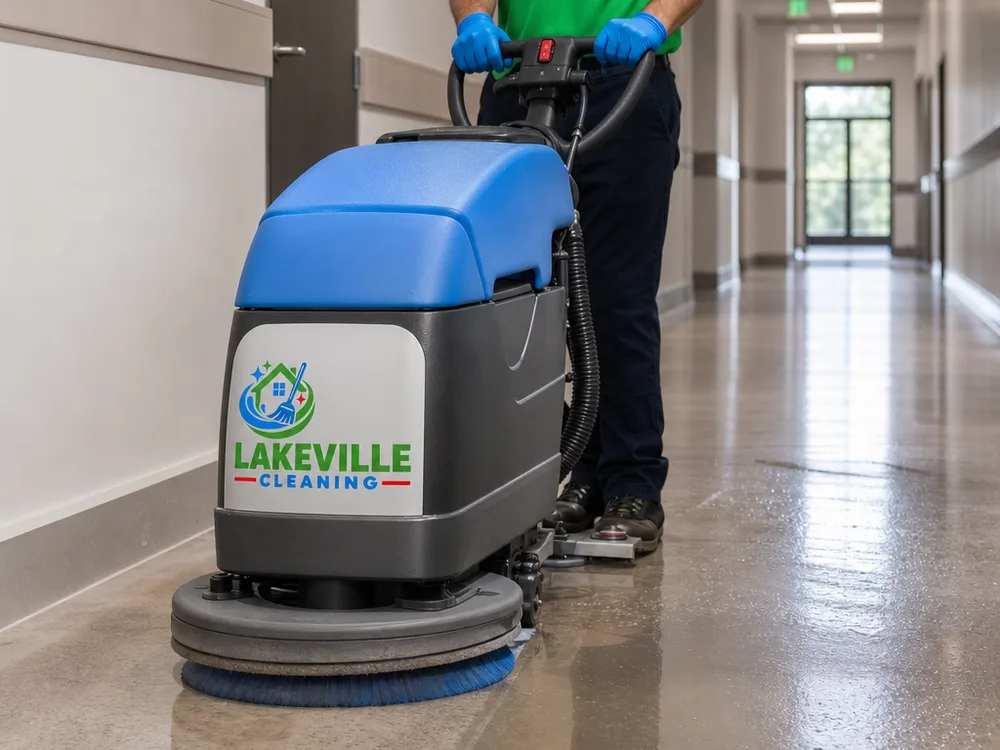
Auto-scrubber cleaning a commercial hallway hard floor with a visible clean path, controlled moisture, and full pad contact

A gym can look clean and still fail the nose test

Members notice odor before they notice anything visual, and odor in a gym has physical sources: bacteria in mat surfaces and upholstery seams, moisture held in grout and under rubber flooring, standing damp in shower corners, and air handling that never quite dries the locker room out between busy periods.

Treating that with fragrance is the common mistake, because the smell returns the moment the air warms up. The sources get cleaned instead: grip surfaces and pads where sweat lands, grout and drains in wet areas, soft surfaces that hold bacteria, and corners where moisture sits long enough to grow something.

Working out of 20855 Kensington Blvd, Suite 4 in Lakeville suits a sector with awkward hours, since many fitness centers open very early or run around the clock and need cleaning fitted into whichever stretch is genuinely quiet.

Request a Callback
Where gyms fail

The areas that decide whether a gym feels clean

Gym cleaning concentrates on sweat contact, moisture and soft surfaces. Those three account for nearly every complaint a fitness center receives about cleanliness.

Grip and contact surfaces on equipment

Handles, bars, benches, pads, machine seats, screens and adjustment levers take direct sweat contact all day. Member wipes help and do not substitute for a disinfecting pass at the frequency the equipment's use actually warrants.

Locker rooms and showers

Shower walls, floors, grout, drains, benches, lockers and the dry-off area stay damp for long stretches, which is exactly what odor and residue need. These rooms carry the highest frequency in the building and the most detailed task list.

Mats, turf and studio floors

Floor mats, stretching areas, turf lanes and studio surfaces absorb sweat directly, and rubber flooring traps moisture in its seams. Each material takes a different method, and over-wetting any of them makes the smell worse rather than better.

Soft surfaces and the odor trail

Upholstered benches, seat backs, towel bins, mat storage and anything fabric hold bacteria after the hard surfaces have been handled. These usually explain a smell that persists when a gym appears visibly clean throughout.

Entry, water stations and glass

The front desk, turnstile area, water filling stations, mirrors and studio glass carry constant hand contact and splash. Mirrors in particular get judged closely, since members spend much of a session looking straight at them.

Round-the-clock buildings

Scheduling cleaning for a gym that barely closes

Fitness centers are awkward to schedule because the quiet hours are narrow and sometimes nonexistent. A twenty-four-hour facility has no closed window at all, a studio empties between classes, and a club with early members is busy by five in the morning. The schedule works backward from whichever stretch has the fewest people on the floor.

Common approaches by facility type:

  • ✓Overnight or pre-dawn service. The main pass happens in the quietest stretch: locker rooms done thoroughly, equipment disinfected, floors and mats handled, glass finished. Members arriving at opening find the building genuinely reset.
  • ✓Staffed daytime attention. Busy clubs want someone present during peak hours for locker rooms, wipe-down stations, towels and spot work. That runs alongside the deeper overnight pass rather than instead of it, because the two do different jobs.
  • ✓Studio work between class blocks. Boutique studios and group fitness rooms clear completely between sessions, which gives short predictable windows for floors, mats and props, with the fuller clean scheduled at the end of the day.

Gym flooring mixes rubber, turf, mats and hard surfaces, which hold moisture and odor differently and none of which suit a standard mop. The periodic reset on those surfaces belongs to our deep cleaning service, and it is usually what finally resolves a returning smell.

Request a Callback
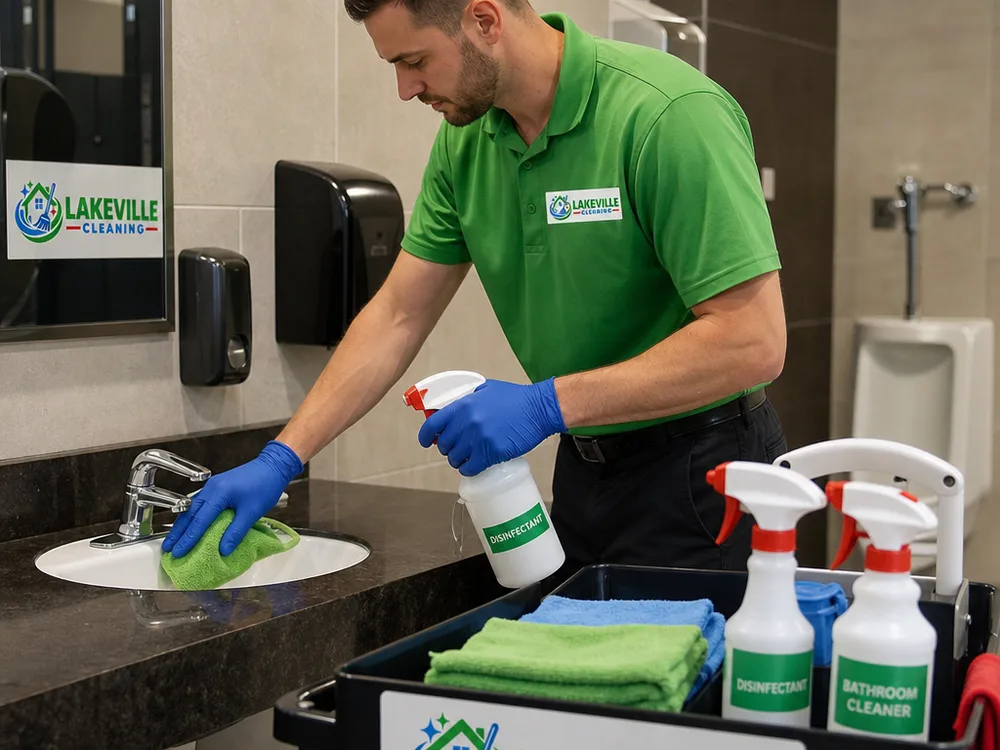
Cleaner disinfecting commercial restroom fixtures with organized supplies and microfiber cloths
Planning around members

Building a cleaning plan around member traffic

Two questions shape a gym plan: when the floor is quiet enough to work, and where the odor is actually coming from. Both get answered on site.

01

Find the quiet window

Traffic patterns get mapped across the week, including class times, peak evenings and whether the building closes at all. Overnight is often the only real option, and for some facilities the answer is a combination of overnight and staffed hours.

02

Trace the smell to its source

Rather than planning around fragrance, we check the likely sources: shower grout and drains, mat surfaces, upholstery seams, towel handling, mat storage and air movement in the locker rooms. The scope then targets what we found.

03

Match methods to each floor type

Rubber, turf, mats, studio wood and hard floors all need their own approach and their own moisture limit. Getting this wrong is how a gym ends up with a worse odor problem after cleaning than it had before the visit.

04

Set equipment disinfection frequency

How often grip surfaces need a full pass depends on member volume and hours, not on a general rule. The frequency gets set from your traffic, then reviewed once the account has run long enough to show whether it holds up.

Request a Callback
Pricing basis

How Much Does Gym Cleaning Cost in Lakeville?

Gym and studio cleaning generally falls in the $0.10 to $0.25 per square foot range for recurring work. A single studio often lands around $300 to $900 per month, while a full facility with locker rooms, showers, and extended or around-the-clock hours commonly runs $1,200 to $6,000+ per month.

Locker rooms and showers carry most of the cost, because moisture and odor need addressing at the source rather than covered over. Equipment touch point counts, mat area, and whether the floor can be worked zone by zone during open hours fill in the rest.

Request a Callback
Gym operators ask

The misunderstanding behind most gym cleanliness complaints

Members wipe the equipment themselves. Is that enough?

It helps and it is not a cleaning program. Member wipes are inconsistent by nature, they rarely reach pads, seat backs, adjustment levers or the frame underneath, and many machines get used repeatedly without one. A scheduled disinfecting pass covers the whole contact surface at a known frequency, which is what a wipe station cannot deliver.

Why does the locker room still smell after being cleaned?

Usually because the source was never reached. Odor in a locker room lives in shower grout, floor drains, bench undersides, locker interiors and whatever stays damp between busy periods. Surface cleaning without addressing those leaves the smell intact, and over-wetting the room during cleaning can genuinely make it worse.

Can you work in a facility that never closes?

Yes, by zone and in sequence. Work moves through the building in sections during the quietest hours, taking one area at a time so members always have somewhere to train and a locker room they can use. It takes more planning than a closed building does, and for this sector it is entirely routine.

What should the cleaning plan cover that we are probably missing?

Soft surfaces and storage, most often. Operators think in terms of equipment and locker rooms, while upholstered benches, mat storage racks, towel bins, cubby shelving and the fabric on seat backs quietly hold bacteria. They are also the first place to check when a gym looks clean and still does not smell right.

Should mats and turf be ours to clean or yours?

Either, as long as it is written down. Many facilities keep daily mat wiping in house and bring a crew in for the periodic deeper treatment, since mats and turf need controlled moisture and a method suited to the material. What matters is that both sides know which surfaces they own and how often.

How often do showers need a deep clean versus a daily one?

Daily attention keeps them acceptable; a periodic deep pass is what keeps them from declining. Grout, drains, door seals and corners need scheduled descaling and treatment beyond the daily routine. Busy facilities tend to set that cycle monthly, and the interval should follow member volume rather than the calendar alone.

Plan the schedule

Make the gym smell as clean as it looks

Tell us your hours, locker room count, and whether the building ever fully closes. A walkthrough during a busy stretch traces any odor to its source and produces a schedule that fits around your members. Message the office to arrange that visit.

Request a quote

Tell us about your space

Send the basics and we will follow up to arrange a walkthrough and put the scope in writing.