Medical facility cleaning · Lakeville

Medical and Dental Cleaning in Lakeville

Cleaning for clinics, dental offices and practice spaces, where disinfection follows your written protocol, waiting rooms carry constant contact, and anything regulated stays in your staff's hands.

✓Works to your protocol ✓Waiting and exam rooms ✓Regulated waste stays yours
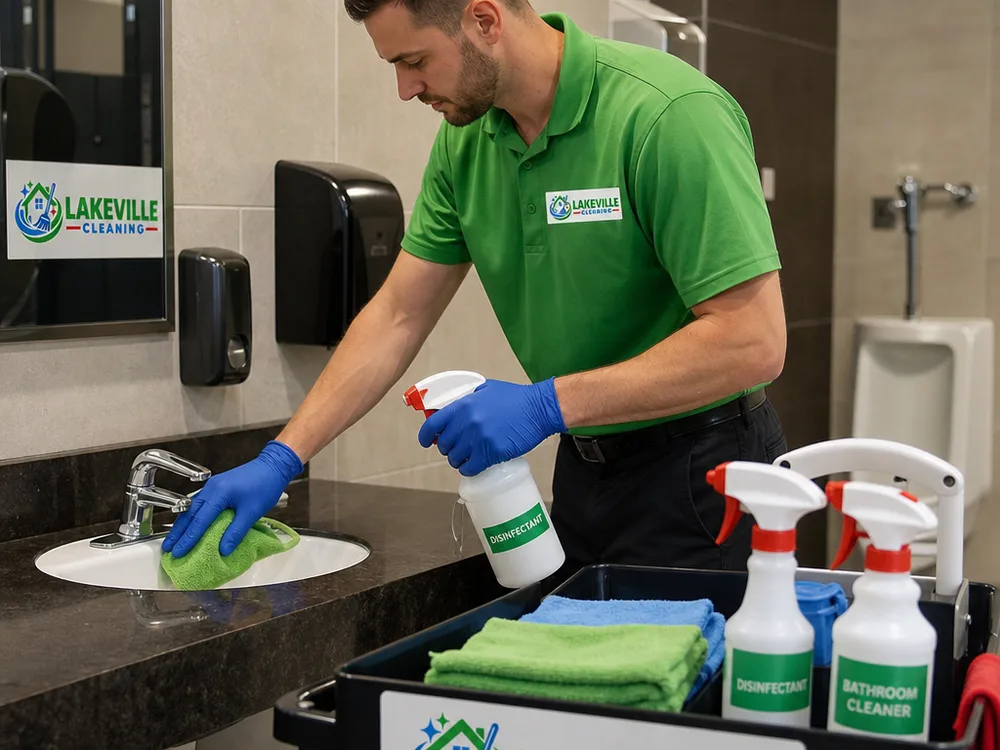
Cleaner disinfecting commercial restroom fixtures with organized supplies and microfiber cloths

A practice is judged in two rooms, for different reasons

Patients form their opinion in the waiting room, where armrests, check-in counters, magazine ledges, a children's corner and the floor around chair legs take continuous contact. It is the busiest room in the building and the one most often cleaned in a hurry.

Exam and treatment rooms work the other way around: the surface list matters less than the method. Disinfectant has to stay wet for the time its label states, and wiping it away early turns a documented process into a gesture. That discipline is most of the job here.

Dispatch runs from 20855 Kensington Blvd, Suite 4 in Lakeville, close to the clinics and dental practices around town, so an evening slot after the last patient leaves does not involve a long drive at either end of the visit.

Request a Callback
Clinical cleaning

What cleaning a practice space involves

Medical work is less about extra tasks than about doing ordinary ones in a defined way, in a defined order, with a product your protocol already names.

Your protocol governs the products

Practices have infection-control procedures and an approved product list already. Crews work to those rather than bringing a preference, and where a product states a contact time, that time gets observed instead of estimated.

Waiting rooms cleaned for contact

Chair arms, seat backs, check-in counters, pens, door pulls, toy surfaces and the floor beneath seating. Volume is the issue here rather than visible soil, which is why this room usually carries the highest frequency in the building.

Exam rooms worked in a set order

Rooms get cleaned the same way every visit, high to low and clean to dirty, with cloths changed between rooms instead of carried along. That consistency is what makes the result repeatable when different cleaners are on shift.

Clear boundaries around waste

Sharps containers, red bag material and anything patient-related stay with your staff, who are trained and documented for it. Crews handle ordinary trash and recycling, and report a container needing your attention rather than touching it.

Restrooms and the specimen question

Patient restrooms get fixture-level attention and frequent supply checks. Where a restroom is also used for collection, your procedure decides what happens before cleaning, and that sequence belongs in the written scope.

Access and hours

Scheduling cleaning around a full patient day

Practices run full appointment books, so cleaning happens after the last patient or before the first. A dental office with a half day, a clinic holding evening hours and a specialist practice that closes early each leave a different window, and the plan follows yours rather than the reverse. Where front and clinical areas have different needs, they carry different frequencies.

Common arrangements for practices:

  • ✓After the last appointment. Crews arrive once patients and staff have gone, which lets exam rooms, restrooms and waiting areas be done properly, with nobody standing by waiting on a room to come free again.
  • ✓Early morning before opening. Some practices prefer the building handed back fresh at the start of the day, with waiting room, restrooms and floors finished ahead of the first arrival and clinical rooms on a set rotation.
  • ✓Split coverage with a midday pass. Busy clinics sometimes add a short daytime visit for restrooms and the waiting room, which is where volume does its damage, while the full clean still happens outside patient hours.

Practices expand and remodel more often than most businesses, and a suite handed back after a buildout carries drywall dust in every vent and cabinet. Our post-construction cleaning service exists for that handover, since a clinical space cannot open with residue still in it.

Request a Callback
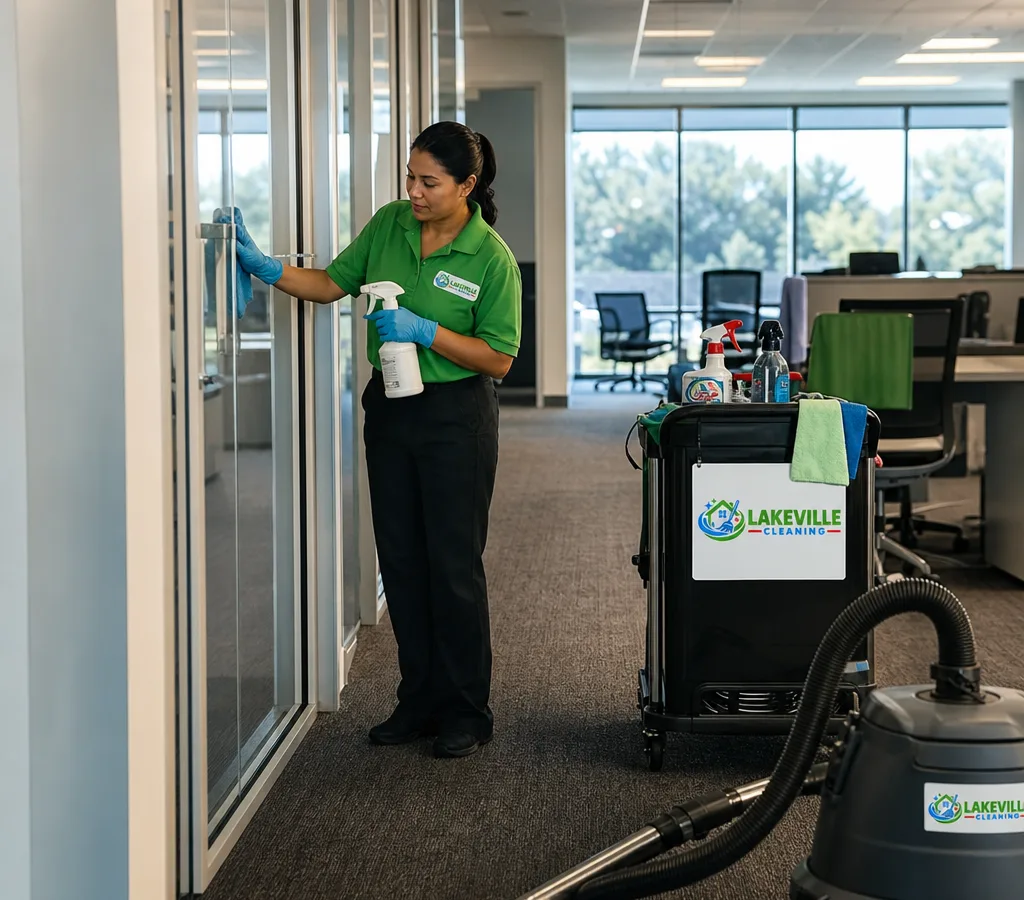
Cleaner disinfecting high-touch points and vacuuming a modern office suite early in the morning
How it begins

Aligning cleaning with procedures you already have

A practice already has rules. Setting up service is largely a matter of writing cleaning into those rules rather than introducing a second set beside them.

01

Review your written procedures

Your practice manager shares the infection-control procedure, the approved product list and anything a regulator or parent organization expects. Cleaning tasks then get written in the language your staff already uses internally.

02

Map rooms by risk and traffic

Waiting areas, restrooms, clinical rooms, sterilization space, staff areas and offices each get their own frequency and method. Which rooms crews may enter unaccompanied is decided in the same conversation, not later.

03

Train the assigned crew on site

The cleaners who will hold the account walk the building with your lead, see where supplies live, and learn the room order and the cloth-change rule before any unsupervised visit. The same crew then stays with the practice.

04

Check the work against the sheet

Spot checks run against the written scope, and your manager can flag anything that looks off. When a product or a step changes on your side, the sheet gets updated rather than left to somebody's memory.

Request a Callback
Practice pricing

How Much Does Medical Facility Cleaning Cost in Lakeville?

Clinic and practice cleaning is quoted on the standard commercial basis of about $0.10 to $0.25 per square foot, with most single-practice spaces falling into the $300 to $900 per month range and larger multi-provider facilities running $1,200 to $6,000+ per month at higher frequencies.

Exam room count matters more than total area, because each one carries its own disinfection routine and contact time that cannot be rushed. Waiting room traffic, restroom count, and whether service happens during or after patient hours also shift the number. The scope is written before the first visit.

Request a Callback
Practice questions

What a practice manager settles before service begins

Do you handle sharps containers or red bag waste?

No, and that boundary is deliberate. Regulated medical waste is handled by your trained staff under your documented procedure and collected by the vendor who carries that chain of custody. Crews remove ordinary trash and recycling, work around those containers, and tell your lead when one is full or sited somewhere that makes cleaning awkward.

Can you use the disinfectants our protocol already approves?

That is the preferred arrangement. Working from your approved list keeps your documentation consistent and avoids introducing a product nobody has evaluated. If you would rather we supply, we will put forward options for your review and your manager signs off before anything is used in a clinical room.

Why does contact time matter so much in an exam room?

Because a disinfectant does nothing meaningful until it has been wet on a surface for the period its label states. Spraying and immediately wiping produces a clean-looking surface and little else, which is the most common failure in clinical cleaning. Crews apply, leave the surface wet, and move on to other work while that time passes.

Do our staff need to escort cleaners in clinical areas?

That is your call and it goes in the scope either way. Some practices want crews unaccompanied after hours once the room order is agreed; others want someone present for clinical space or for specific rooms. Escorted work takes longer and gets priced accordingly, so the decision is worth making deliberately rather than by default.

Is it possible to clean while patients are in the building?

Parts of it, and that often helps. A midday pass on restrooms and the waiting room catches the volume those areas take, and it is the single most useful daytime task in a busy clinic. Clinical rooms are better done once the schedule has ended, both for privacy and because a room in use cannot be given its proper method.

Is a dental office scoped differently from a medical clinic?

Yes, mostly around the operatory and the lab. Chairs, delivery units, light handles and tray surfaces have manufacturer guidance and sit inside your own reprocessing routine, so cleaners work around that equipment rather than on it. Waterline maintenance and instrument reprocessing stay entirely with your clinical team, and the scope says so plainly.

Arrange a visit

Cleaning that fits your infection-control plan

Share your room count, your closing time, and the procedures cleaning has to work inside. We will visit after hours with your practice manager, write the scope in your own terminology, and keep the regulated side where it belongs. Reach us at the office to book that visit.

Request a quote

Tell us about your space

Send the basics and we will follow up to arrange a walkthrough and put the scope in writing.