Post-construction · Lakeville, MN

Post-Construction Cleaning Services in Lakeville

Cleanup after a build, remodel or tenant improvement, run in phases so a space is genuinely ready to hand over: rough clearing, a final detail pass, and a touch-up timed to the walkthrough.

✓Rough, final, touch-up ✓Drywall dust and residue ✓Timed to your handover
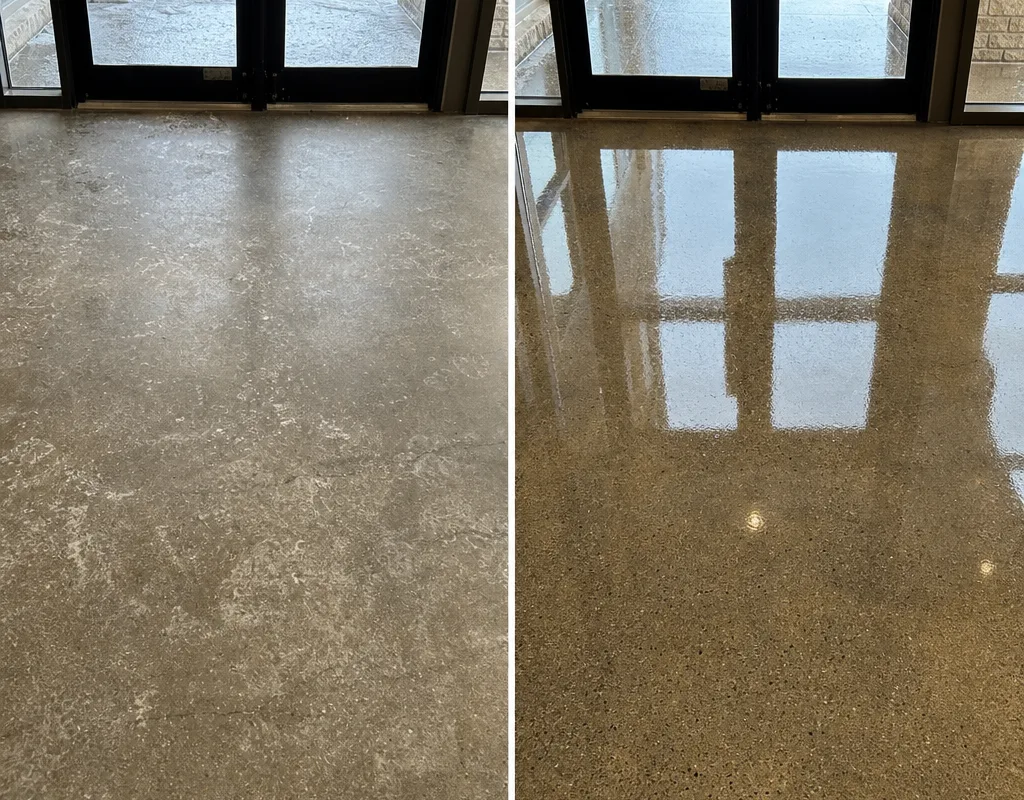
Before-and-after comparison of a Lakeville commercial entryway floor showing reduced salt film and clearer reflection lines

Construction dust does not leave on the first attempt

Drywall dust is the reason this is a trade of its own. It stays airborne for hours, settles on every horizontal and vertical surface including the ones nobody thinks about, and reappears the day after a space looked finished, because moving air simply puts it back down again.

Phasing is the answer to that. Rough cleanup clears debris and the worst of the dust so trades can finish. The final pass details every surface once dust-making work is over. A touch-up catches what resettled and what the last trades left behind. Skip a phase and it shows up on the punch list.

Being based at 20855 Kensington Blvd, Suite 4 in Lakeville puts crews near most of the residential and commercial building going on around Dakota County, which helps when a handover date shifts and the touch-up has to follow it by a day.

Request a Callback
What gets dealt with

The residue a finished build leaves behind

Dust is only part of it. A new or remodeled space carries a predictable set of marks, and they come off with different methods and in a particular order.

Dust in places air pushed it

Ledges, door tops, window tracks, cabinet interiors, electrical plates, vent registers, light coves and the tops of whatever was installed last. Each gets vacuumed before it is wiped, because a damp cloth on dry drywall dust makes paste.

Stickers, labels and adhesive

Appliances, windows, fixtures, tubs and glass all arrive wearing labels, and the glue outlasts the paper. Removal is chosen for the surface, since a solvent that lifts adhesive off glass can dull a painted or coated finish beside it.

Paint flecks, caulk and compound

Overspray on hardware, dried joint compound on floors, caulk smears along tile edges and roller spatter on trim. These come off mechanically rather than chemically, using scrapers and pads picked for the material underneath them.

Grout haze and new floor protection

Fresh tile holds a cloudy film until it is cleaned off, and new finish scratches easily while grit is still in the room. Floors get a dry pass first, then a method matched to what was just installed and how far it has cured.

Glass, fixtures and the first impression

Interior glass, mirrors, polished fixtures and stainless appliance faces are what an owner looks at first, and they show construction film badly. All of it is detailed late in the sequence so earlier work cannot put dust back on it.

The phases

Rough, final and touch-up: what each phase does

General contractors and homeowners sometimes ask for a single clean at the end, and it rarely works out cheaper. Dust generated during framing, drywall and sanding travels into everything that follows, so a space cleaned only once gets cleaned badly, and the trades coming afterward track leftover grit straight back through the finished areas.

Each phase has a different job:

  • ✓Rough cleanup. Debris, offcuts, packaging and bulk dust come out once the heavy trades are done, so finishers are not working in it. Floors are swept and vacuumed, walkways are made safe, and the space becomes usable for paint, flooring and fixtures.
  • ✓Final detail. With dust-making work over, every surface is cleaned in sequence from high to low: ceiling surrounds and ledges, cabinetry inside and out, glass, fixtures, then floors. This is the pass that takes longest and makes a space look complete.
  • ✓Touch-up before handover. Scheduled close to the walkthrough, this pass picks up dust that resettled plus the fingerprints, scuffs and footprints the last trades added. It is short, and it is the one an owner actually sees the result of.

Once a space is occupied, keeping it clean becomes a different problem on a different rhythm. Our commercial cleaning service picks up from there, which matters most in the early months while a new building settles and fresh finishes still need the right care.

Request a Callback
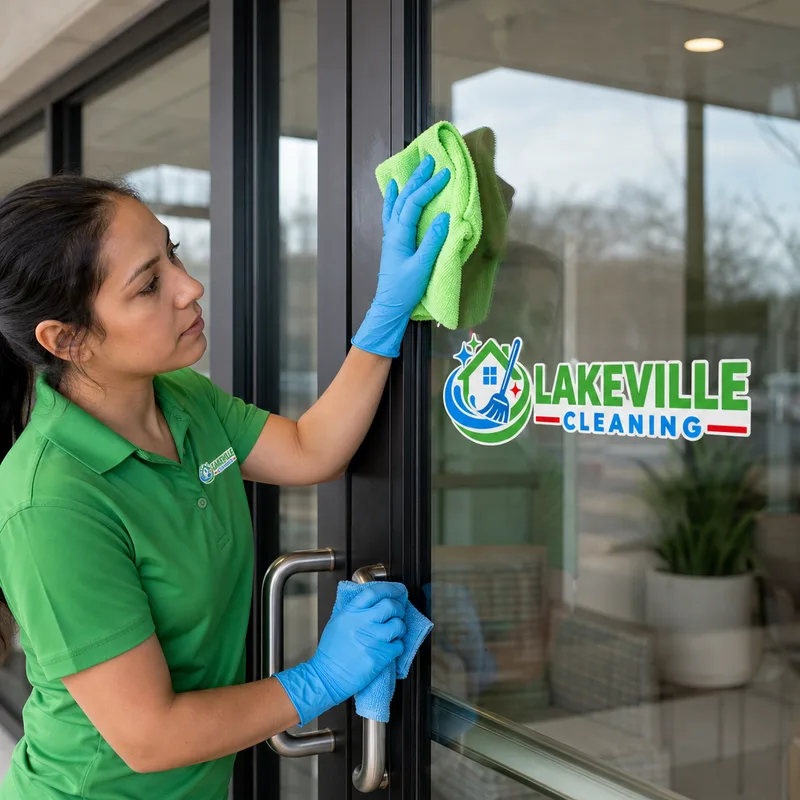
Cleaner removing fingerprints from a glass entry door and adjacent sidelights in a commercial lobby
Working with trades

Fitting cleaning into a construction schedule

The hard part of this work is sequence, not cleaning. Planning happens around your trades, so that our work does not get undone and yours is never left waiting on us.

01

Read the schedule, not just the plans

We ask when drywall sanding finishes, when flooring goes in, when fixtures land, and when the owner walkthrough is booked. Those dates decide the phases. Square footage only decides how long each phase is going to take.

02

Scope each phase separately

Rough, final and touch-up are quoted as distinct pieces of work with their own inclusions, because a project that loses a phase to a schedule squeeze should lose it deliberately and know exactly what it is giving up.

03

Clean in the order dust travels

Overhead and high surfaces come first, then casework and glass, then floors, with vacuums doing the lifting before any cloth or mop appears. Vacuum filters get changed more often on this work than on anything else we do.

04

Return for the resettle

A day or two after the final pass, dust still in the air has come back down and the last trades have been through. The touch-up is booked for that moment rather than hoped for, and it keeps the punch list short.

Request a Callback
Cost factors

How Much Does Post-Construction Cleaning Cost in Lakeville?

Post-construction cleanup is a one-time job rather than a recurring rate, and it is priced in the same band as our other one-time deep work: commonly $300 to $2,500+ depending on the size of the space and how many phases you need. Final-clean-only on a small tenant improvement sits at the low end; a multi-phase job on a larger build reaches the top of it.

Phase count is the main driver, followed by how much settling dust the build has generated, glass and fixture count, and floor type. Hard floors needing a restorative pass are quoted on the floor care scale of $0.60 to $2.00+ per square foot. We walk the site before quoting, because a build's condition at handover is difficult to judge from plans.

Request a Callback
Contractor questions

What general contractors ask when scheduling the final clean

How soon before handover should the final clean be booked?

Late enough that the dust-making trades are done, early enough to leave room for a touch-up. Booking the final pass as the very last item on a schedule is the common mistake: something always needs a late fix, and that fix puts dust and footprints back into a space nobody has time to clean twice. Plan the gap in from the start.

Do you handle debris removal or just cleaning?

Ordinary construction debris, packaging and offcuts come out as part of rough cleanup and go into the project dumpster. Hauling away when no dumpster is on site, and anything regulated such as paint waste or treated material, gets arranged separately so disposal happens the way the project requires it to.

Can this be done on a remodel while the owner is living there?

Yes, and the phasing changes for it. Occupied remodels need the clean area protected from the work area, dust control between them, and shorter more frequent passes rather than one large one at the end. Crews work with whatever containment the contractor set up, and clean the lived-in side on its own rhythm.

Who is responsible if a finish gets damaged during cleaning?

Methods are picked for the material, and anything risky gets raised before it is touched: uncured finishes, delicate stone, unsealed grout, specialty coatings and anything the manufacturer restricts. Where a surface needs a specific product or a waiting period, the contractor or supplier tells us and that instruction is followed.

Is a tenant improvement different from a new build?

Mostly in access and neighbors. A suite being fitted out inside a working building means freight elevator times, shared corridors to keep clean, and other tenants who notice dust in the hallway. Cleaning tasks look similar, but logistics around them take considerably more planning than an empty site does.

Why does dust keep showing up after the space was cleaned?

Because fine dust stays airborne long after surfaces look done, then settles overnight. It also hides in ductwork, above ceiling grid and inside cabinetry, and comes back out when the heating or cooling runs. That is what a touch-up pass exists for, and why registers, grilles and cabinet interiors belong in the final detail rather than in optional extras.

Schedule a phase

Hand the space over clean, on the date you promised

Send the project address, the square footage and your handover date, then tell us which phases you want covered. Crews will visit the site, read it against your schedule, and come back with a phased scope and estimate. Call the office to line up that site visit.

Request a quote

Tell us about your space

Send the basics and we will follow up to arrange a walkthrough and put the scope in writing.