Office cleaning · Lakeville, MN

Office Cleaning Services in Lakeville

Cleaning for professional suites and shared workplaces, where the break room and the restrooms decide what your staff thinks of the building, and a conference room has to be ready for whoever walks in next.

✓Desks and shared equipment ✓Conference room resets ✓Break room and restrooms
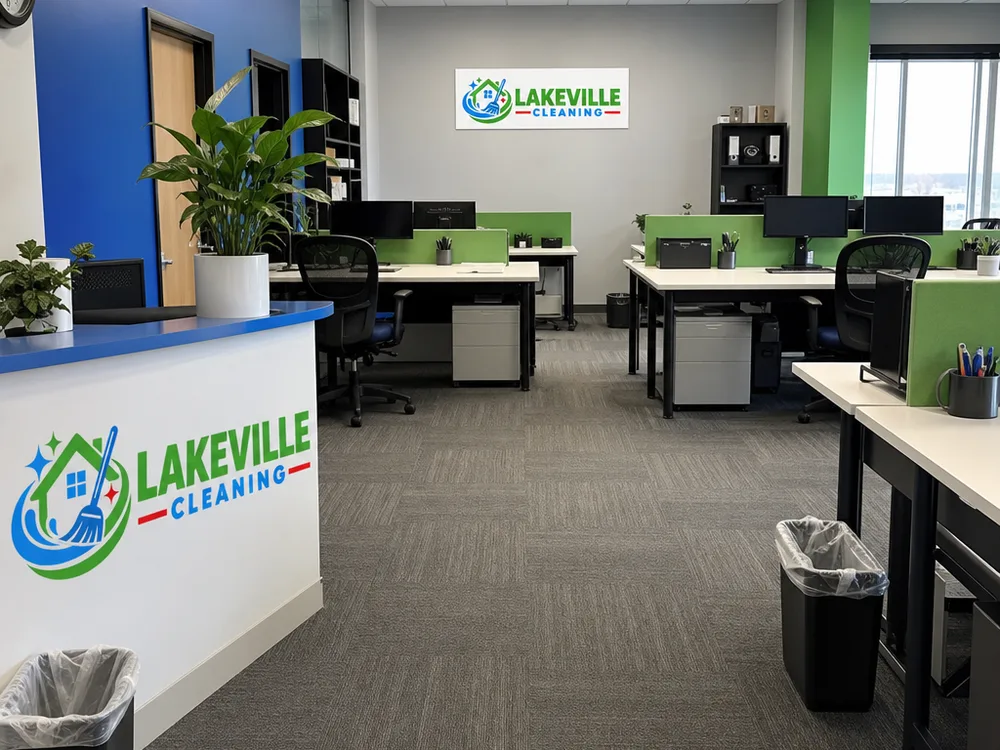
Clean open office with arranged desks, vacuumed carpet, and waste bins with fresh liners

What staff actually notice about an office clean

Nobody comments on a vacuumed carpet. What gets talked about is the microwave interior, a refrigerator nobody claims, a conference table with ring marks, and a restroom that ran out of towels on Friday afternoon. Office cleaning gets judged on those details, not on floor area.

Occupancy makes that harder than it used to be. A suite that fills on Tuesday and sits half empty on Friday wears unevenly, so a flat five-nights-the-same plan spends effort where nobody was and short-changes the rooms that took the week's traffic.

The office at 20855 Kensington Blvd, Suite 4 in Lakeville is a short drive from most of the business parks and professional suites around town, which keeps a mid-week extra visit from turning into a scheduling project for either side.

Request a Callback
The office standard

What an office cleaning plan should cover

Offices fail in a small number of predictable places. A plan is mostly a decision about how much attention each of them gets, and how often that attention repeats.

Desks, and what you want touched

Keyboards, monitors, phones and desk surfaces all need a rule, because cleaning around personal items and cleaning them are different jobs. You decide whether desks are wiped, dusted around, or left alone when paperwork is out.

Shared equipment and touch points

Copier panels, door hardware, light switches, stair rails and the shared kitchen tap collect contact all day long. These get a disinfecting rotation rather than an occasional pass, since they are the route illness takes through a suite.

Conference rooms between bookings

A room is only as clean as its last meeting left it. Tables, chair arms, whiteboard trays, remote controls and the glass in the door get reset, so the next group is not sitting in yesterday's crumbs while a client watches.

The break room nobody volunteers for

Counters, appliance exteriors, the inside of the microwave, cabinet fronts, the sink and the floor under the table. What happens to the refrigerator interior, and how often, goes in writing, because that one causes the most friction.

Restrooms with supplies tracked

Fixtures, partitions, mirrors, floors, and dispensers checked on every visit instead of restocked after a complaint. Nothing damages a workplace's view of its cleaners faster than an empty dispenser at nine in the morning.

Frequency and coverage

Office schedules that match how the suite fills

Office need is not proportional to square footage. Headcount, hybrid patterns, how client-facing the space is and whether staff eat at their desks all matter more than the floor plan does. A quiet twenty-person suite with a busy kitchen can need more attention than a larger floor where half the team works remotely most of the week.

Three shapes that fit most suites:

  • ✓Full nightly service. Restrooms, break room, trash, floors and touch points every night, with deeper rotations folded in. This suits busy suites, client-facing offices and anywhere a kitchen gets used hard at lunchtime.
  • ✓Two or three nights a week. Lower-occupancy suites do well here, provided restrooms and the break room are covered on every visit. Desk-level dusting and floor work rotate so that no area waits a month for attention.
  • ✓Daytime porter hours. For buildings with reception traffic, a short daily presence keeps restrooms stocked, entry glass clear and spills handled, with the fuller clean still happening after the last person leaves.

Most offices eventually want the same crew, a written room list and frequencies they can hold someone to. That is exactly what our janitorial service is: the recurring agreement behind the cleaning, rather than a visit booked whenever the suite gets bad.

Request a Callback
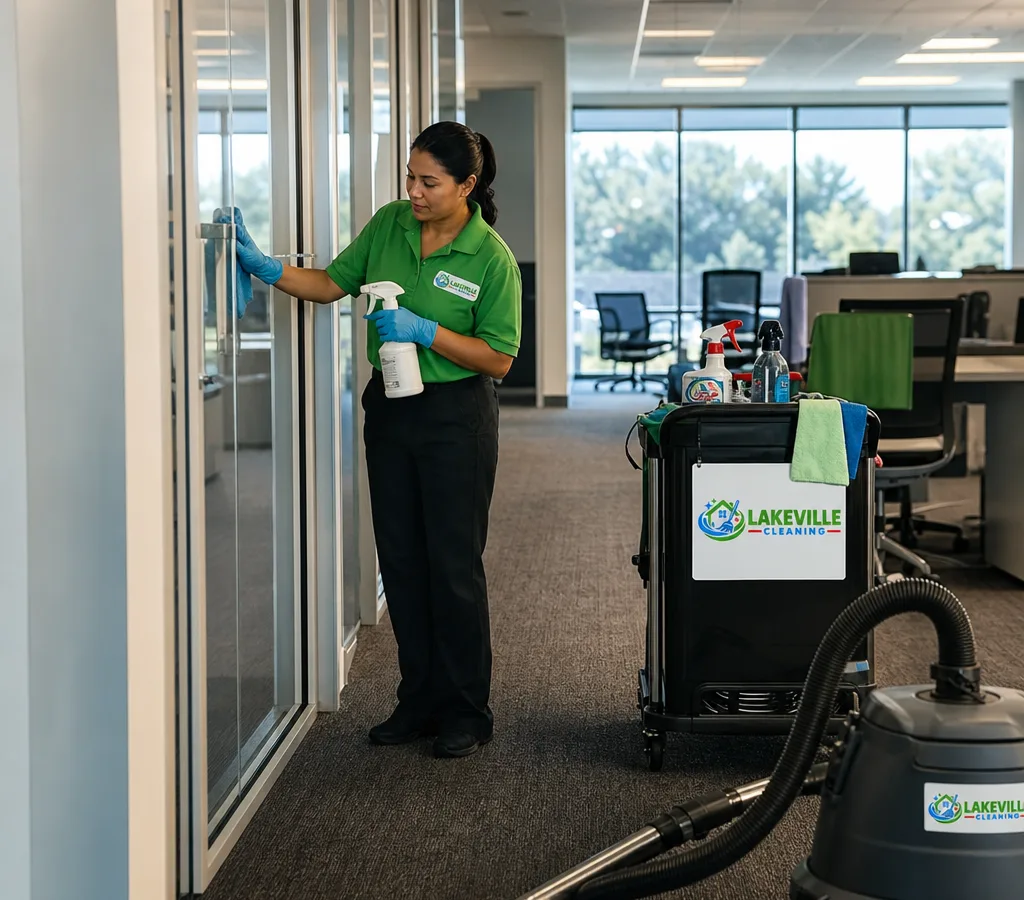
Cleaner disinfecting high-touch points and vacuuming a modern office suite early in the morning
Starting an office account

From a walkthrough to a plan your staff stops noticing

Getting an office plan right takes one honest conversation about what bothers people and one clear decision about desks. Nearly everything else follows from those two.

01

Count the use, not the rooms

We ask how many people are in on a typical day, which days run busiest, whether lunches get eaten in or out, and how often clients come through. Those answers drive frequency far more than a floor plan ever does.

02

Settle the desk policy

You decide what happens at individual workstations and it gets written down. Some offices want everything wiped, others want nothing touched while papers are out, and plenty want a middle rule applied only to empty desks.

03

Put restrooms and the kitchen first

Those two generate nearly every complaint, so they get fixed frequencies at the top of the sheet. The rest of the plan is built around protecting them, including which night the floor work happens on.

04

Keep one channel for changes

A named contact raises issues and requests extras, and changes get written onto the sheet rather than mentioned in passing to whoever happens to be in the building. That is how a plan stays accurate past month three.

Request a Callback
What it depends on

How Much Does Office Cleaning Cost in Lakeville?

Office work in Lakeville is usually priced between about $0.10 and $0.25 per square foot for recurring service. A single-suite professional office often sits near the $300 to $900 per month range, while a multi-floor or multi-tenant building with daily service can reach $1,200 to $6,000+ per month.

Headcount drives more of this than floor area does: more people means more restroom traffic, more break room use, and more desk-adjacent trash. Conference room turnover and the number of days per week you want someone on site move it further. A walkthrough fixes the figure.

Request a Callback
Office questions

Common misunderstandings about office cleaning plans

Will you clean our desks and keyboards?

Only to the rule you set. Left open, this becomes the most common complaint in office cleaning: either staff find their paperwork moved, or they find a desk visibly untouched. Writing it down solves it. A frequent middle ground is wiping clear desks, dusting around occupied ones, and never handling documents or personal items at all.

Is nightly cleaning necessary for a small suite?

Often not, and paying for it anyway is a common waste. What usually matters is that restrooms and the break room are covered every visit; those two drive almost all dissatisfaction. A smaller suite with moderate headcount can run comfortably on two or three nights, with floor and dusting rotations spread across them.

Does routine cleaning keep carpet and hard floors in shape?

It maintains them and does not restore them. Vacuuming lifts loose soil and damp mopping handles surface grime, while the traffic lanes still darken over time and hard floor finish wears thin where people walk. Periodic extraction and machine work sit in our floor care service and run on their own longer cycle alongside the nightly plan.

Our occupancy changes week to week. Can the plan flex?

Reviewing it properly beats adjusting ad hoc. If the office genuinely runs quiet on particular days, frequencies can be weighted toward the busy ones instead of spread evenly. What should stay constant is restroom coverage and supply checks, since a quiet day still leaves dispensers empty for the following morning.

Do we need to store cleaning supplies and equipment on site?

A small closet helps and is not essential. Crews can carry what they need, though leaving a vacuum and basic supplies in the building saves time on every visit and usually shows up in the price. Paper products and soap are a separate decision: either side can buy them, and the written scope records which it is.

We lease one suite in a managed building. Can we hire our own cleaners?

Usually yes, and plenty of tenants do when building-provided service covers only common areas or runs on a frequency that does not suit them. The practical step is checking your lease for anything about contractors and access, then telling building management who is coming in. We work to whatever access procedure the landlord has in place.

Get a plan drawn up

A cleaning plan built around your actual week

Let us know your suite size, how many people are in on a typical day, and the two or three things that currently generate complaints. Expect a walkthrough, frequencies written per area, and the desk rule settled in the same visit. Send us a note and we will arrange a time.

Request a quote

Tell us about your space

Send the basics and we will follow up to arrange a walkthrough and put the scope in writing.