Industrial cleaning · Lakeville, MN

Industrial Cleaning Services in Lakeville

Cleaning for warehouses, light manufacturing and distribution space, where dust sits on steel overhead, concrete carries the traffic, and the work has to fit around production instead of stopping it.

✓High dusting, overhead steel ✓Concrete and dock aprons ✓Works around production
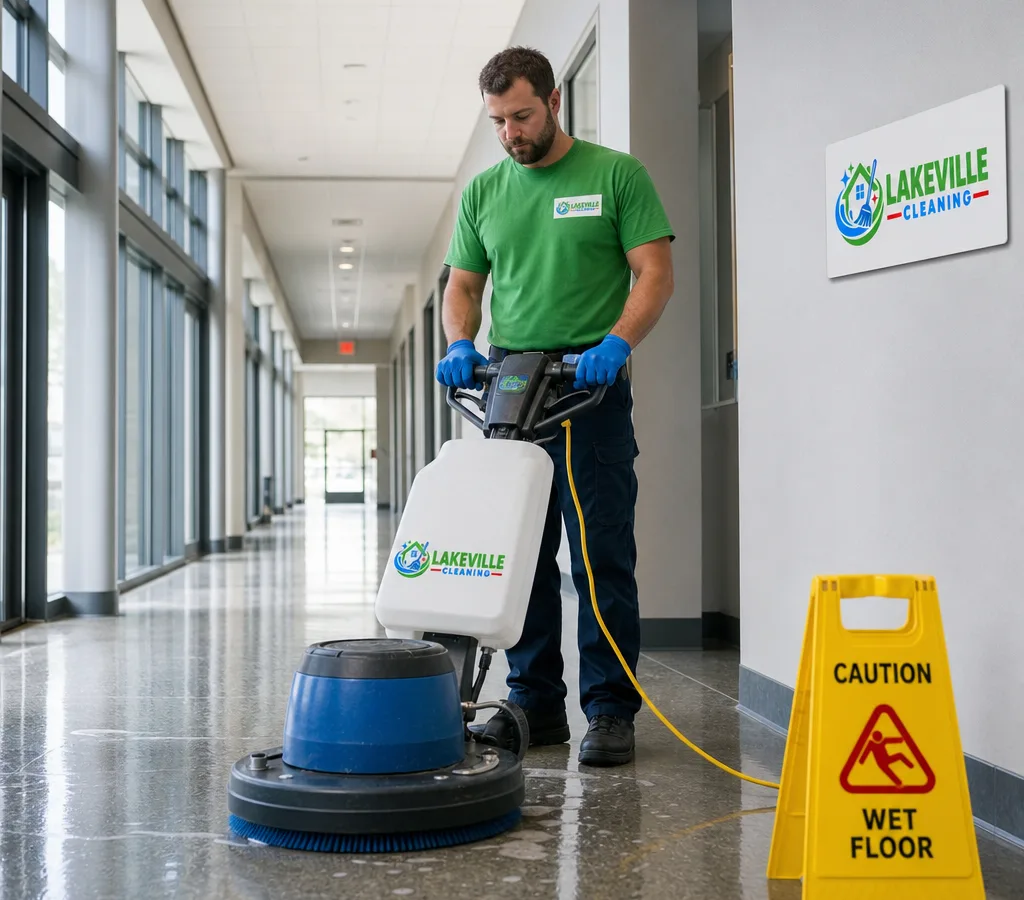
Cleaning technician maintaining commercial hard floors in a Lakeville facility hallway with a floor machine and wet-floor safety signage

Cleaning scaled to a working building, not an office suite

An industrial space gets dirty in a different direction. Dust leaves the floor, settles on racking, beams, conduit and light fixtures, then drops back down the moment a fan or a forklift moves the air. Cleaning that kind of building from the ground up wastes most of the effort.

So the order matters: overhead first, equipment surrounds next, floors last, with dry pickup before anything wet touches concrete. Sealed and bare slab behave differently under a scrubber, and a vacuum or sweeping compound beats a mop on a floor that holds fines down in its pores.

Sitting at 20855 Kensington Blvd, Suite 4 in Lakeville puts us close to the shops and distribution buildings across the south metro, which counts for a lot when the only window for the work is a shutdown weekend or the gap between shifts.

Request a Callback
How the work is run

What industrial cleaning covers that office cleaning skips

Most of the difference comes down to reach, dust load and the rules of the building. These are the parts of an industrial scope that never appear on a standard janitorial sheet.

High dusting at height

Beams, joists, racking tops, conduit runs, duct exteriors and light fixtures hold long accumulation. Removing it needs lifts or extended reach plus a plan for what falls, which is why floor work gets scheduled after that pass and never before it.

Concrete that holds fines

Bare and sealed slab wear differently and respond to different chemistry. Tire marks, oil spotting and embedded grit come up with the right pad pressure and dwell time, while on unsealed concrete a mop mostly moves the fines from one place to another.

Equipment areas, hands off the machines

Cleaning happens around presses, conveyors, benches and panels: the floor underneath, the surrounds, the guards and the dust settled on top. Your people handle anything involving opening, de-energizing or moving the machine itself.

Docks, aprons and forklift lanes

Loading areas collect everything the yard brings in: pallet splinters, shrink wrap, road salt through winter, standing grit at the dock edge. Lanes and the apron get their own cycle, because they dirty faster than the rest of the slab.

Restrooms and break rooms on the plant side

Plant restrooms take harder use than office ones and often sit next to the dirtiest part of the building. They get a supply check, a disinfecting rotation and a floor method of their own so they stay usable through a full shift.

Scope and timing

Industrial scopes for warehouses, shops and plants

Industrial buildings around Dakota County rarely need the same thing twice. A distribution warehouse wants its lanes and racking clear; a machine shop wants chips, coolant mist film and oil spotting handled; a light assembly plant wants dust kept off product and out of the air. Scope follows the material a building generates and how fast it generates it.

Scopes usually fall into one of these:

  • ✓Recurring plant service. A crew on a set rotation keeps break areas, restrooms, office space and traffic lanes under control, with high dusting and full-slab scrubbing scheduled as periodic work inside the same agreement.
  • ✓Shutdown and changeover work. When production stops for a holiday, a maintenance window or a line change, that gap is when overhead, equipment surrounds and the whole floor can be done properly without working around anyone.
  • ✓One-time heavy reset. A building taken over from another tenant, a space that has gone a long stretch without overhead attention, or a yard-side area that got away from everyone: scoped once, priced once, done in a planned sequence.

Shop and warehouse glass is a job of its own: dock-side windows, overhead door panels and the office storefront pick up road spray and airborne dust that interior cleaning never touches. Our window cleaning service handles that on a separate visit with separate equipment.

Request a Callback
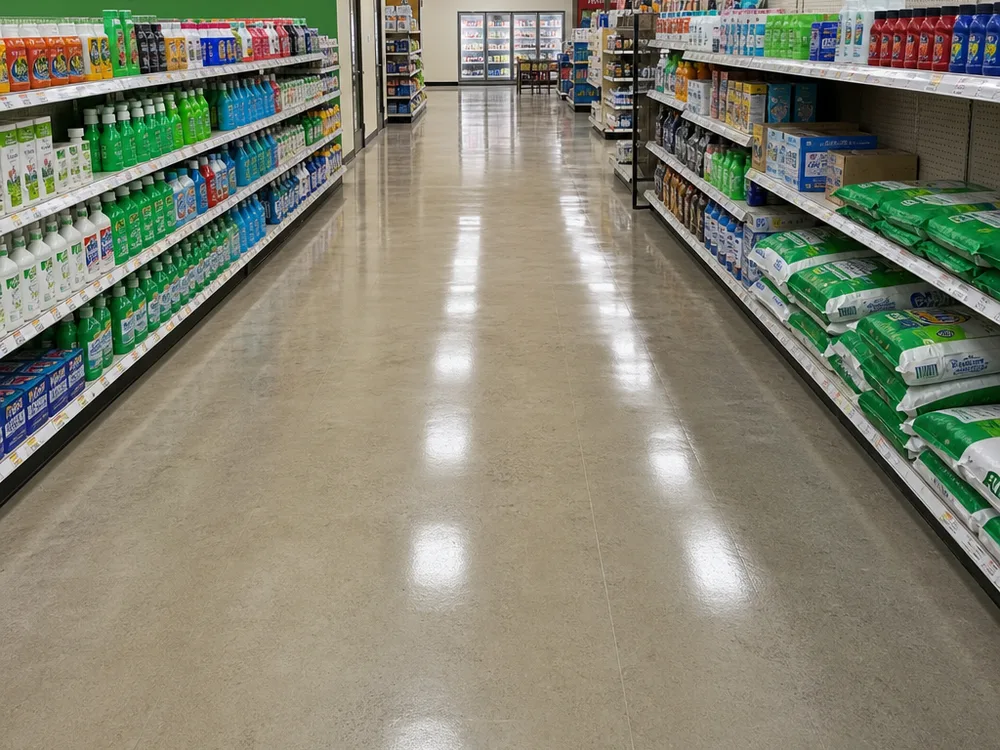
Finished retail aisle floor with clean traffic lanes and a consistent sheen during off-hours
Planning the visit

Getting industrial work done without stopping production

Access, safety rules and sequence do more for an industrial clean than any product does. All three get agreed before a crew arrives on site.

01

Site visit and rules review

Your safety coordinator walks us through sign-in, protective equipment requirements, restricted zones, lockout responsibility and who escorts. Floor area gets measured, dust load overhead gets judged, and anything needing a lift is noted.

02

Agree the sequence and the window

Overhead, equipment surrounds, lanes and slab are ordered so nothing finished gets dirtied again, then dropped into a time slot that fits your shifts. Longer jobs are split into zones so the building keeps working as crews move through.

03

Dry removal before anything wet

Bulk debris, pallet waste and loose dust come out first with vacuums and sweeps. Water on a floor that still holds grit turns into slurry and dries back as a film, so wet work waits until that dry pass is genuinely finished.

04

Walk it with your team

At the end the zones get reviewed with whoever signed off on the scope, usually a maintenance lead or plant supervisor. Anything missed is corrected before crews leave, rather than appearing on a list the following week.

Request a Callback
What drives cost

How Much Does Industrial Cleaning Cost in Lakeville?

Industrial work is quoted on the same commercial basis as the rest of the site, about $0.10 to $0.25 per square foot for recurring service, though large open floor plates often sit at the lower end of that band. A warehouse or shop on a regular schedule commonly runs $1,200 to $6,000+ per month, while a smaller operation can land nearer $300 to $900.

Concrete and hard floor maintenance is usually quoted separately at $0.15 to $0.60 per square foot for routine scrubbing, rising toward $0.60 to $2.00+ where a restorative pass is needed. Dust load, dock condition, equipment density, and the access window around production hours matter more than raw area. The figure is set after a walkthrough.

Request a Callback
Common questions

Deciding how to scope industrial cleaning for your facility

Can you work while the plant is running?

In most buildings, yes, by zone. Office areas, break rooms, restrooms and open floor can be done around a working shift as long as crews stay out of the lanes your traffic needs. Overhead work and full-slab scrubbing are different: both need the area clear, so they get scheduled into a shutdown, a weekend or a quiet shift.

Do your crews follow our safety program?

Yours governs the site. Crews sign in the way your staff does, wear what your program requires in the areas they enter, and stay out of restricted zones unless someone from your side escorts them. Anything involving energized equipment, confined space or lockout stays with your people, and the work gets planned so it is not needed.

How often does overhead dusting need doing?

It depends on what a building makes and moves. Dry goods warehouses can go a long stretch between passes, while a shop cutting or sanding material builds visible load far faster. One practical test: whether dust shows on beam tops and fixture housings from the floor, or lands on product and benches once air starts moving.

Will scrubbing the concrete make it look new?

It will come back a long way, though honest expectations help. Scrubbing lifts traffic film, grit and surface oil, and a sealed slab usually looks close to its best again. Staining soaked into bare concrete, failing epoxy and crack damage are repair questions rather than cleaning ones, and we say so at the walkthrough.

What do you do with the waste you collect?

Ordinary debris, dust and wrap go into your dumpster or compactor unless you want it handled another way. Anything that looks like a regulated material, such as solvent, oil or process residue, stays where it is and gets flagged to your maintenance lead, because disposal of that belongs to the building and its permits.

Is office space inside a warehouse part of this scope?

It can be, and usually should be. Front office, scales, dispatch and the hallway between them pick up plant dust and get overlooked by both sides, since one party treats them as plant and the other as office. Including them in the same scope avoids the odd result where a production floor is spotless and the office attached to it is visibly not.

Plan the work

Get an industrial scope built around your window

Let us know what the building makes or moves, how high the ceilings run, and when production actually pauses. Crews will walk the floor with your maintenance lead and come back with a sequence, a zone plan and an estimate. Reach out and we will book the site visit.

Request a quote

Tell us about your space

Send the basics and we will follow up to arrange a walkthrough and put the scope in writing.